


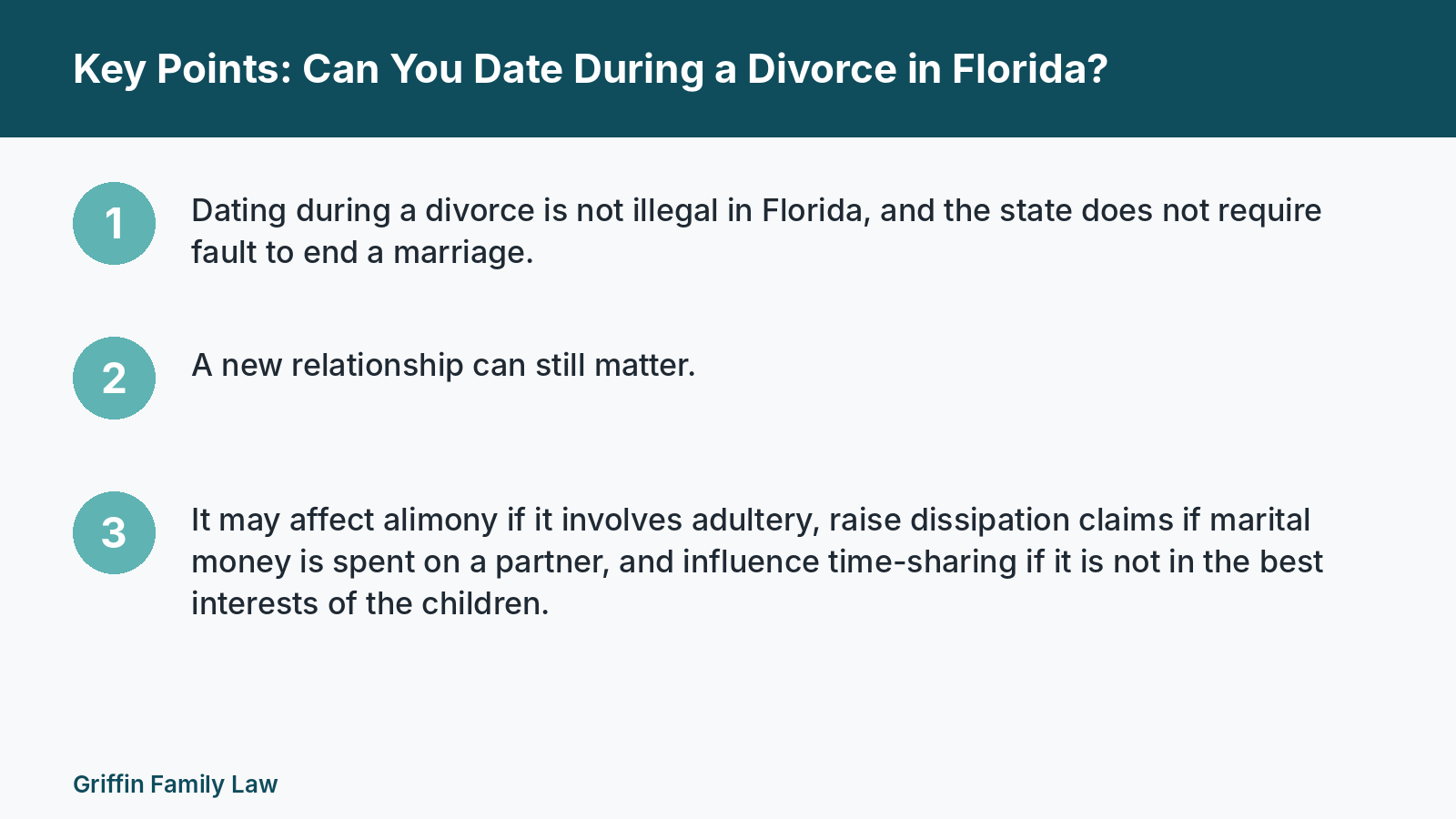
Dating during a divorce is not illegal in Florida, and the state does not require fault to end a marriage. A new relationship can still matter. It may affect alimony if it involves adultery, raise dissipation claims if marital money is spent on a partner, and influence time-sharing if it is not in the best interests of the children.
Reviewed by Kent Griffin, attorney at Griffin Family Law. Last reviewed November 2026.
Yes, dating during a divorce is not illegal in Florida, and Florida is a no-fault divorce state. But a new relationship before the divorce is final can still affect your case. Florida courts may consider adultery when deciding alimony; spending marital money on a new partner can affect property division, and introducing children to a new partner can become an issue in time-sharing. Many people wait until the divorce is final, or at least proceed carefully, to avoid giving the other spouse new arguments.
Divorces in Northeast Florida can take months or longer, and it is natural to want to move forward with your life. Understanding how a new relationship might be used in court helps you make informed choices.
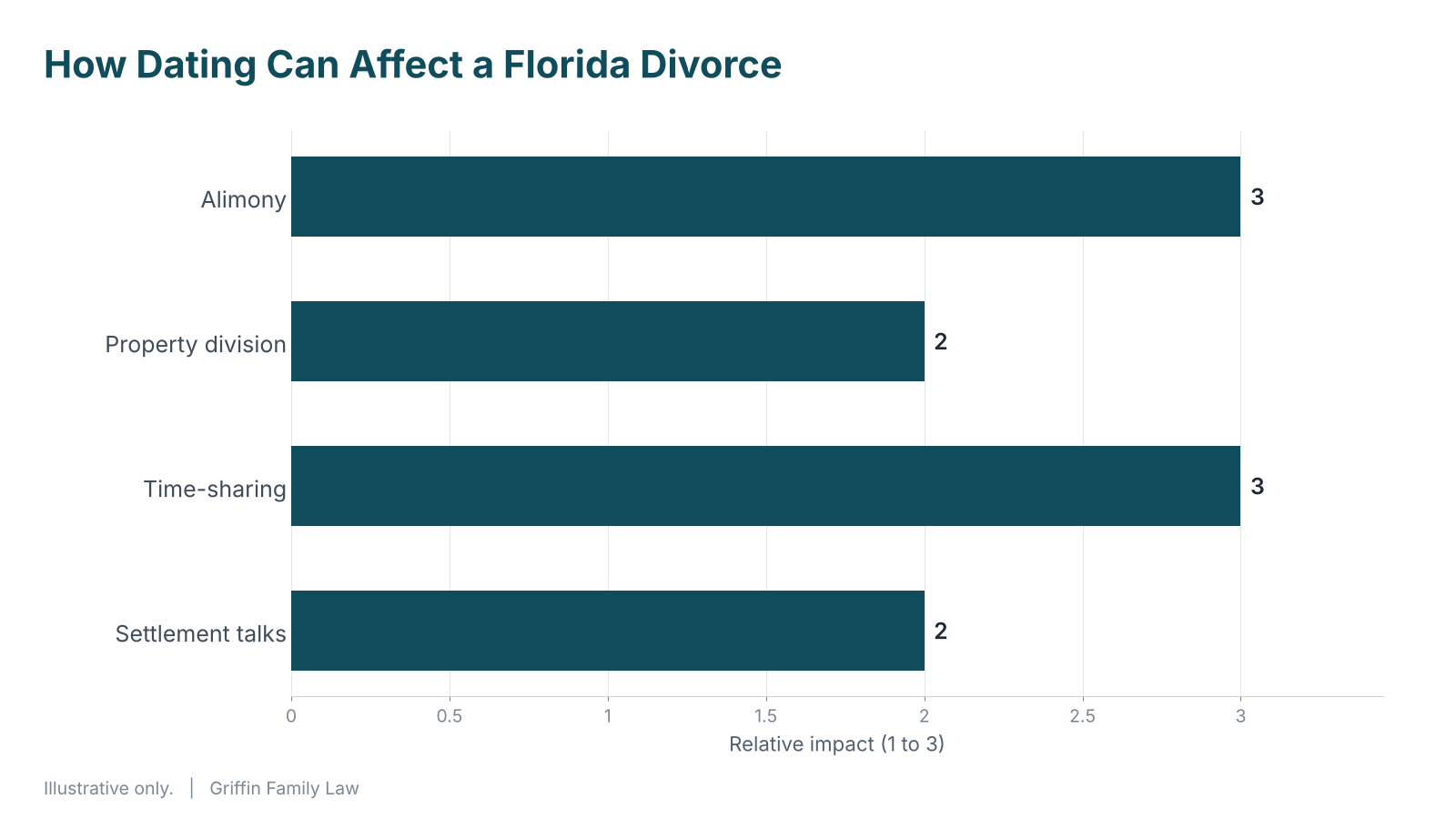
How Dating Can Affect a Florida Divorce
Issue | How Dating Can Matter |
|---|---|
Alimony | Florida law allows the court to consider adultery and its circumstances when deciding alimony |
Property division | Marital money spent on a new partner may be treated as wasted and credited back to the other spouse |
Time-sharing | How and when children are introduced to a new partner can affect the court’s view of a parent’s judgment |
Settlement negotiations | A new relationship can raise emotions and make agreement harder |
Living arrangements | Living with a new partner may affect support claims and children’s routines |
Alimony and Adultery
Although fault is not needed to get divorced in Florida, the alimony statute allows courts to consider adultery by either spouse and the circumstances around it. Whether a relationship that started after separation counts as adultery, and how much weight it carries, depends on the facts. A new relationship can also matter if the person receiving support moves in with a new partner who contributes to household expenses, which may reduce the need for alimony.
Spending Marital Money on a New Partner
Using marital funds for dinners, trips, gifts, or rent for a new partner can be treated as dissipation of marital assets. When a court finds dissipation, it can credit that amount back to the other spouse when dividing property. Keeping careful records of spending and avoiding the use of joint funds for a new relationship can help protect your share. Learn more about dividing assets in a Florida divorce.
Children and New Relationships
Florida decides time-sharing based on the children’s best interests. A new relationship on its own does not usually change time-sharing. Problems arise when a new partner is introduced too quickly, spends overnights during the children’s time without consideration of their adjustment, has a concerning background, or creates conflict. Some parenting plans include provisions about introducing new partners. Our guide to parenting plans and time-sharing in Florida explains how plans can address these issues.
Florida Has No Legal Separation
Some people assume that moving out means they are legally separated. Florida does not have a formal legal separation status, so spouses remain married until the final judgment is entered. That is why conduct during the case, including a new relationship, can still be relevant to the issues the court decides.
Social Media and Messaging
Photos, posts, and messages about a new relationship can be used as evidence. They may show spending, travel, or time spent away from children. Assume anything you post or send could be shown to the judge, and avoid discussing your divorce or your new relationship publicly.
Practical Steps if You Choose to Date
- Keep dating separate from your children until the divorce is further along.
- Do not use joint accounts or marital funds for dates, gifts, or travel.
- Avoid having a new partner stay overnight during time-sharing.
- Stay off social media about the relationship.
- Be honest with your attorney so there are no surprises.
- Consider how a new relationship may affect settlement talks.
Agreements Can Address It
Spouses who want to move on can address these issues directly in a marital settlement agreement, including how new partners are introduced to the children. A clear written agreement reduces future disputes. Learn more about marital settlement agreements.
Is Dating During Divorce Considered Adultery?
Legally, a married person who has a sexual relationship with someone else before the divorce is final may be treated as committing adultery, even if the spouses have separated. Because Florida has no formal legal separation, the marriage continues until the final judgment is entered.
That does not stop the divorce, but it can become part of the alimony analysis. Florida courts may consider adultery and its circumstances when deciding whether to award alimony and how much, especially when marital funds were involved.
Frequently Asked Questions
Is it illegal to date during a divorce in Florida?
No. Dating is not illegal, but it can affect issues in the divorce.
Does adultery affect alimony in Florida?
It can. Florida courts may consider adultery and its circumstances when deciding alimony.
Can dating affect time-sharing?
It can if a new partner is introduced in a way that is not in the children’s best interests.
Can I spend money on a new partner during my divorce?
Using marital funds on a new partner may be treated as dissipation and credited back to your spouse.
Should I wait until my divorce is final to date?
Many people do to avoid complications, but the right choice depends on your situation.
Can my spouse’s new relationship lower the alimony I receive?
Possibly. Florida law allows alimony to be reduced or ended when the recipient is in a supportive relationship with someone else.
Can I date while separated before my divorce is filed?
Yes, but the same risks apply because you are still legally married until a final judgment is entered.
Talk to a Florida Divorce Attorney
Griffin Family Law represents spouses in Neptune Beach, Jacksonville, and across Northeast Florida. When you call, our team will ask about your separation, your children, and your finances, then explain how a new relationship might affect your case and how to protect your interests.